Understanding Missouri Lagoon Systems: Requirements, Pros & Cons
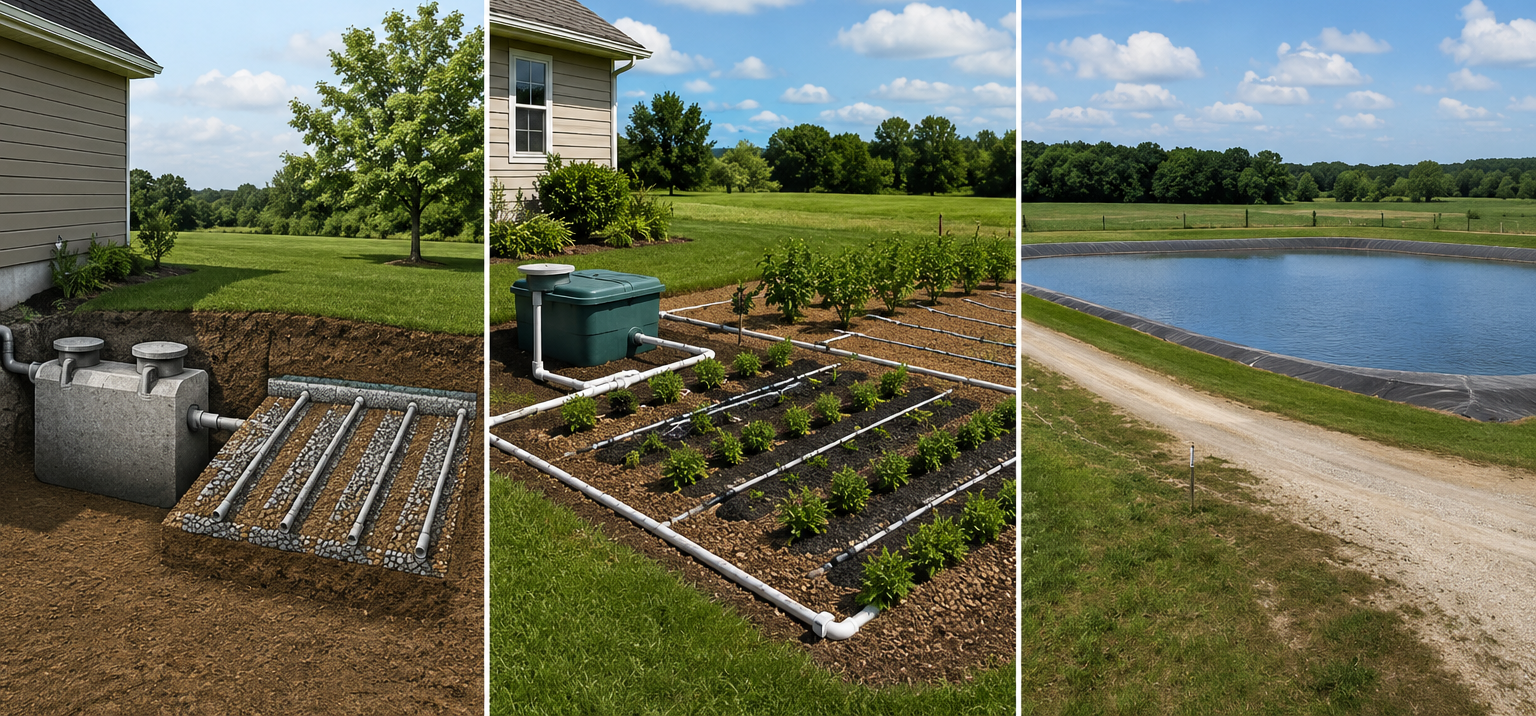
If you've spent any time in rural mid-Missouri, you've probably seen them — those shallow, rectangular ponds tucked into the back corner of a property, usually fenced off and sometimes marked with a small sign. Those are lagoons, and they're one of the most common forms of residential wastewater treatment in Missouri.
For homeowners on rural acreage, a lagoon is often the most practical and cost-effective septic option available. But they come with specific requirements, and understanding what you're getting into before installation — or before purchasing a property that has one — makes a significant difference.
How a Lagoon System Works
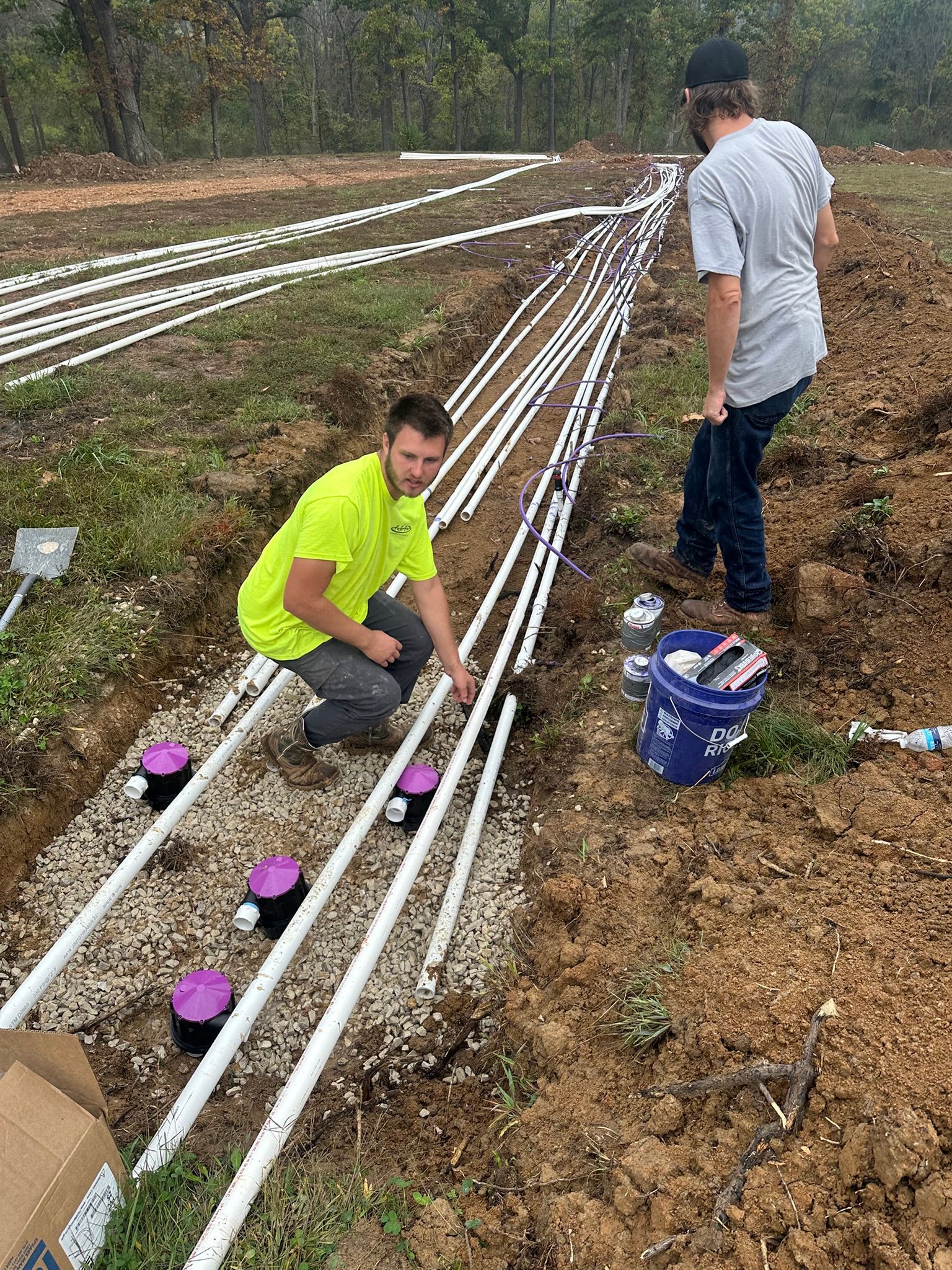
A lagoon receives wastewater directly from the home after it passes through a septic tank (or sometimes directly, depending on the design). The lagoon itself is a shallow earthen basin, typically lined with compacted clay or a synthetic liner, that holds wastewater while natural biological processes treat it.
Treatment in a lagoon is primarily aerobic — sunlight penetrates the shallow water column, wind creates surface agitation, and naturally occurring bacteria break down organic material over time. The goal is to hold wastewater long enough that biological and physical processes reduce pathogens, nutrients, and organic material to acceptable levels before the water evaporates or slowly percolates into the surrounding soil.
This is a fundamentally low-tech system, which is part of its appeal. There are no motors, no pumps, no electronic controls. The lagoon does its work passively.
Missouri Requirements for Lagoon Installation
Missouri regulates lagoon systems through the Department of Health and Senior Services and through county-level health departments. Key requirements include:
Minimum lot size. Missouri generally requires a minimum of three acres for a residential lagoon system. This ensures adequate setback distances from property lines, wells, structures, and neighboring properties. Some counties impose stricter acreage requirements.
Soil conditions. The soil underlying a lagoon site must be evaluated to ensure it can support the lagoon structure and that groundwater won't compromise the system. High water tables can cause problems with lagoon integrity and treatment effectiveness.
Setback distances. Missouri regulations specify minimum distances from lagoons to wells, property lines, structures, drainage ways, and bodies of water. These setbacks exist to protect drinking water sources and neighboring properties.
Permits. Installation requires permits from the county health department, and the system must be designed and installed by a licensed contractor. Inspections occur at key stages of the installation process.
If you're considering a property with an existing lagoon, verifying that it was installed with proper permits and meets current setback and size requirements is an important part of due diligence.
Advantages of Lagoon Systems
Lower installation cost. Compared to engineered alternatives like drip systems or aerobic treatment units, lagoons have relatively low installation costs. The primary work involves excavation, compaction, and inlet/outlet piping — no complex mechanical systems.
Minimal ongoing maintenance. Without pumps, motors, or electronic components, there's very little to go wrong mechanically. Routine maintenance involves periodic inspection of the inlet and outlet structures, monitoring water levels, and occasional dredging when accumulated sludge reduces effective volume — typically every 10 to 20 years depending on usage.
Longevity. A properly sited and installed lagoon can operate effectively for decades. There's no drain field to fail, no leach lines to clog, and no mechanical components to replace on a regular schedule.
Flexibility for rural lots. On larger rural properties where the acreage requirement isn't a constraint, lagoons offer siting flexibility that conventional drain fields don't always provide.
Disadvantages of Lagoon Systems
Acreage requirement. The three-acre minimum is a real constraint. For smaller rural lots or properties where most of the acreage is wooded or otherwise unsuitable, a lagoon may not be an option regardless of other factors.
Aesthetic and odor considerations. Lagoons can produce odors, particularly in warm weather when biological activity increases. Wind direction, lagoon sizing, and vegetation can all influence how much odor is noticeable near the home. Proper sizing relative to the household load is the most important factor in odor control.
Regulatory evolution. Missouri septic regulations have tightened over time, and a lagoon that was installed legally under older regulations may not meet current standards. This can become relevant during property sales when an inspection reveals a non-conforming system.
Not suitable for all soil conditions.While lagoons have fewer soil requirements than conventional drain fields, they still need adequate site conditions. Properties with extremely high water tables, expansive soils, or insufficient depth to groundwater may not be suitable.
Is a Lagoon Right for Your Property?
The best way to answer that question is a site evaluation. A licensed installer can assess your soil conditions, lot size, setbacks, and local requirements to determine whether a lagoon is viable — and compare it to the alternatives.
Advanced Septic & Pumping installs and services lagoon systems throughout mid-Missouri. Call us at
573-636-2727 or
visit the contact page.