What Type of Septic System Is Right for Your Missouri Property?
When you're building a home in rural mid-Missouri or replacing a failing system, one of the first questions you'll face is what type of septic system to install. It's not a one-size-fits-all decision. The right system depends on your lot size, soil conditions, proximity to water, local regulations, and budget — and choosing the wrong one can mean a system that underperforms, fails early, or doesn't pass inspection.
Here's a practical breakdown of the most common septic system types used in Missouri and what determines which one is right for your property.
Conventional Septic Systems
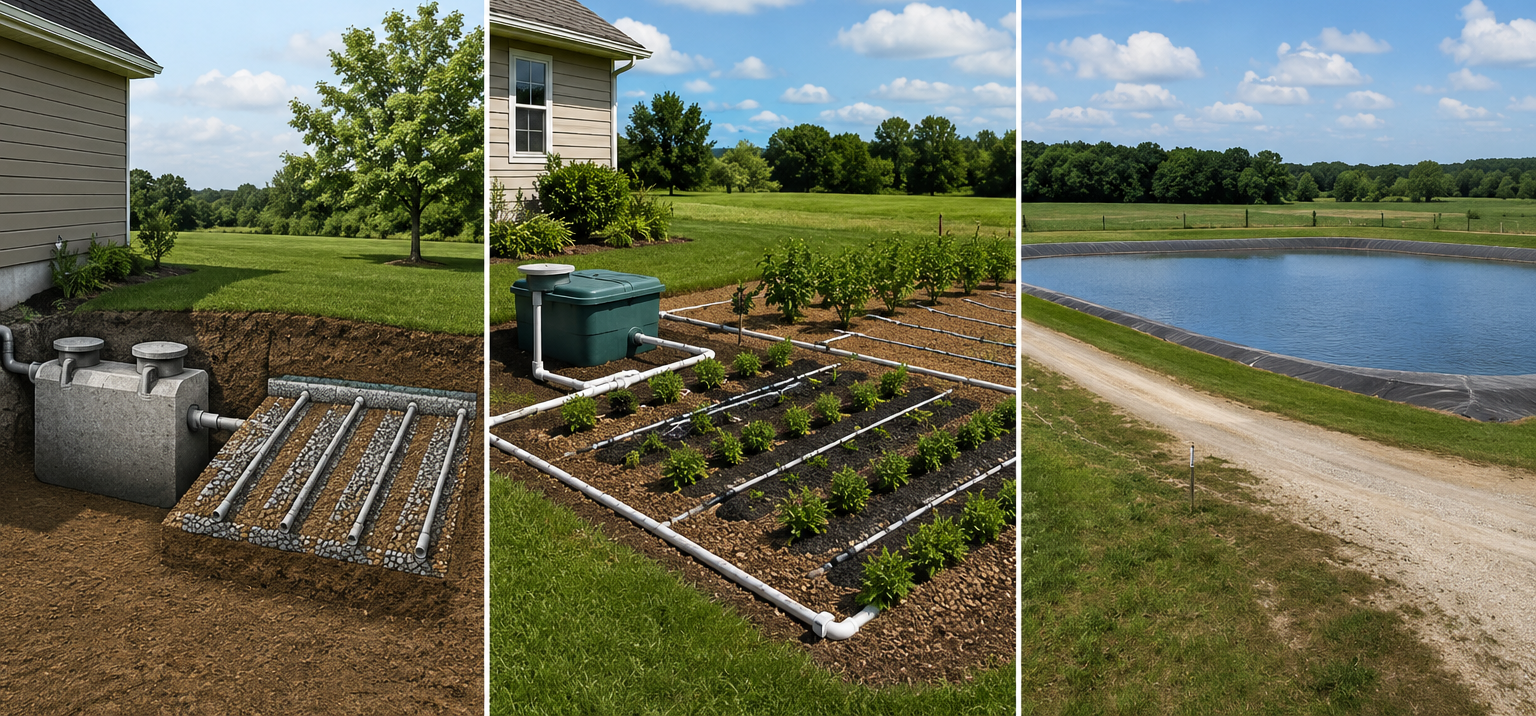
A conventional system is the most common residential septic setup in Missouri. It consists of a septic tank — typically concrete or fiberglass — connected to a drain field (also called a leach field) where treated wastewater disperses into the soil.
Wastewater flows from the home into the tank, where solids settle and anaerobic bacteria begin breaking down organic material. The clarified liquid then flows to the drain field through perforated pipes and filters through the soil, where additional treatment occurs naturally.
Conventional systems work well on properties with good soil permeability and sufficient space for a drain field. Sandy or loamy soils that allow water to move through at an appropriate rate are ideal. In mid-Missouri, where clay-heavy soils are common, conventional systems may require additional design considerations or may not be viable at all on certain lots.
Lagoon Systems
Lagoons are extremely common in rural Missouri — arguably the most common alternative to conventional systems in this region. A lagoon is essentially a lined earthen pond that receives and treats wastewater through natural biological processes: sunlight, wind, and aerobic bacteria break down organic material over time.
Missouri regulations generally require a minimum of three acres for a lagoon system, along with suitable soil conditions and appropriate setbacks from property lines, wells, and water bodies. Lagoons require less maintenance than many alternative systems but do require periodic inspection and occasional dredging when sludge accumulates over years of use.
For rural properties with adequate acreage, lagoons are often the most cost-effective option — lower installation cost and minimal mechanical components mean fewer things to fail. The tradeoff is land requirement and the aesthetic reality of having a treatment pond on the property.
Drip Systems
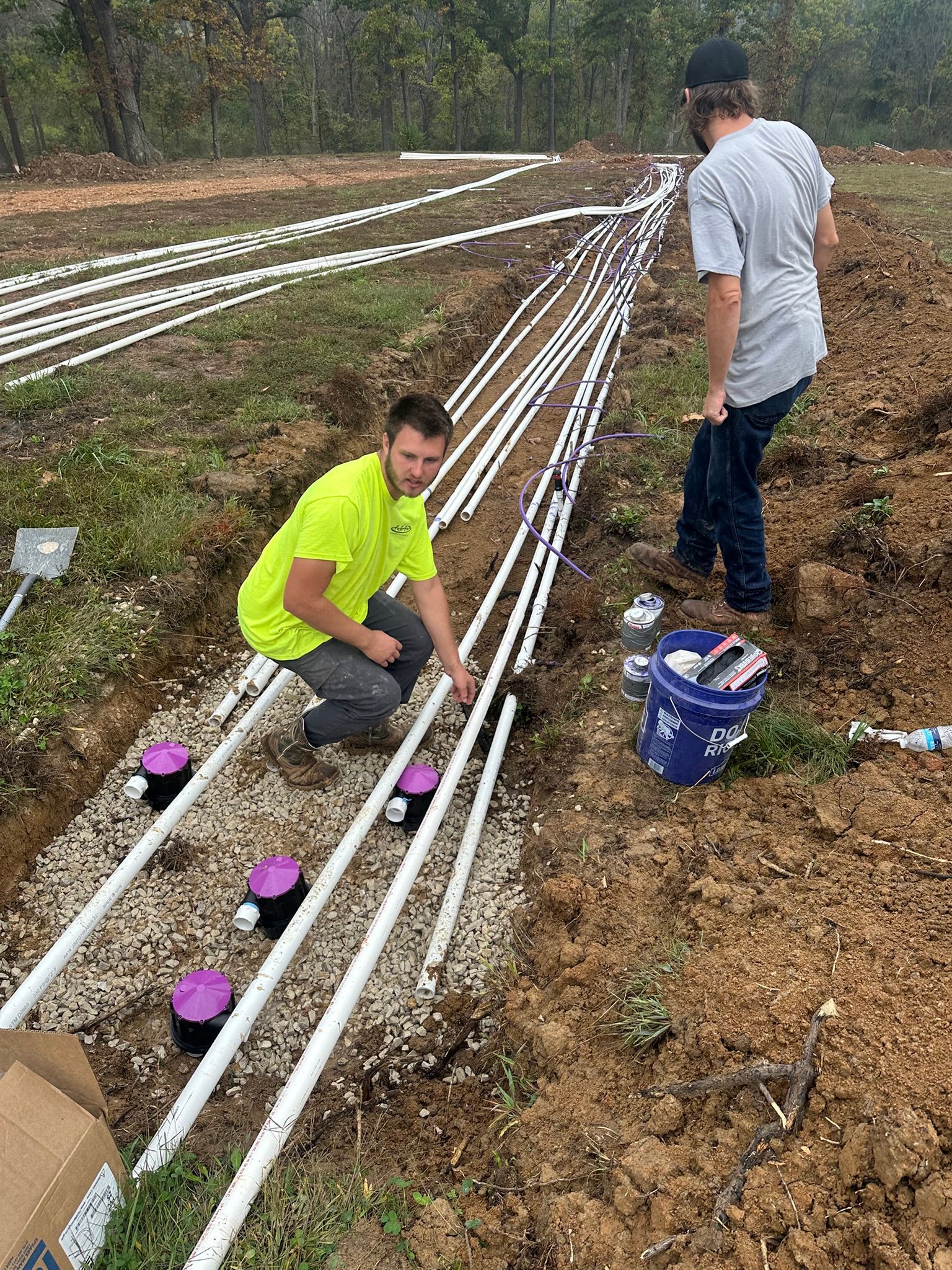
Drip irrigation septic systems are an engineered alternative used when soil conditions or lot constraints make conventional drain fields impractical. Treated wastewater is distributed through a network of small-diameter tubing buried just below the soil surface, releasing effluent slowly at a rate the soil can absorb.
Because drip systems deliver wastewater at a controlled rate, they can work in soils with slower permeability than a conventional drain field requires. They also allow more flexibility in system placement on challenging lots.
The tradeoff is complexity and cost. Drip systems include pumps, filters, timers, and distribution networks that require regular maintenance and monitoring. Mechanical components mean more potential failure points and higher ongoing service costs than conventional or lagoon systems.
Aerobic Treatment Units (ATUs)
Aerobic treatment units introduce oxygen into the treatment process, dramatically accelerating the breakdown of organic waste. The treated effluent from an ATU is significantly cleaner than what exits a conventional septic tank, which allows it to be dispersed through smaller drain fields or used in situations where higher treatment levels are required.
ATUs are commonly required in areas with high water tables, proximity to sensitive water bodies, or soil conditions that can't support adequate treatment in a conventional system. They're also used for existing properties that need to upgrade their treatment level to meet current regulations.
The significant downside of ATUs is ongoing maintenance. Missouri regulations require regular inspection and service contracts for ATU systems, and the mechanical components — air pumps, motors, timers — require periodic replacement. Annual service costs are considerably higher than a conventional system.
How Missouri Regulations Factor In
The Missouri Department of Health and Senior Services, along with county-level health departments, regulate septic system design and installation. Your county's requirements may be more restrictive than state minimums, and soil testing by a certified evaluator is required before a system can be designed and permitted.
The practical implication: you don't choose your system type in isolation. A soil evaluation determines what options are available on your specific lot, and your county health department determines what's permitted. Working with a licensed installer who understands local requirements — and who can walk you through your options before you commit — is the most important step in the process.
Advanced Septic & Pumping installs all system types throughout mid-Missouri, including Jefferson City, Columbia, Fulton, and a 65-mile radius surrounding the area. Call us at
573-636-2727 or visit
the contact page to schedule a site evaluation.
Recent Posts