Conventional Septic Systems vs. Drip Systems vs. Lagoons: A Side-by-Side Comparison
Choosing a septic system for a new home or replacement installation in mid-Missouri isn't always straightforward. The three most common options — conventional systems, drip systems, and lagoons — each have different requirements, costs, maintenance demands, and ideal use cases. What works well on one property may not be permitted or practical on another.
This comparison is designed to give Missouri homeowners a clear picture of how these systems stack up so you can have a more informed conversation with your installer and your county health department.
Conventional Septic Systems
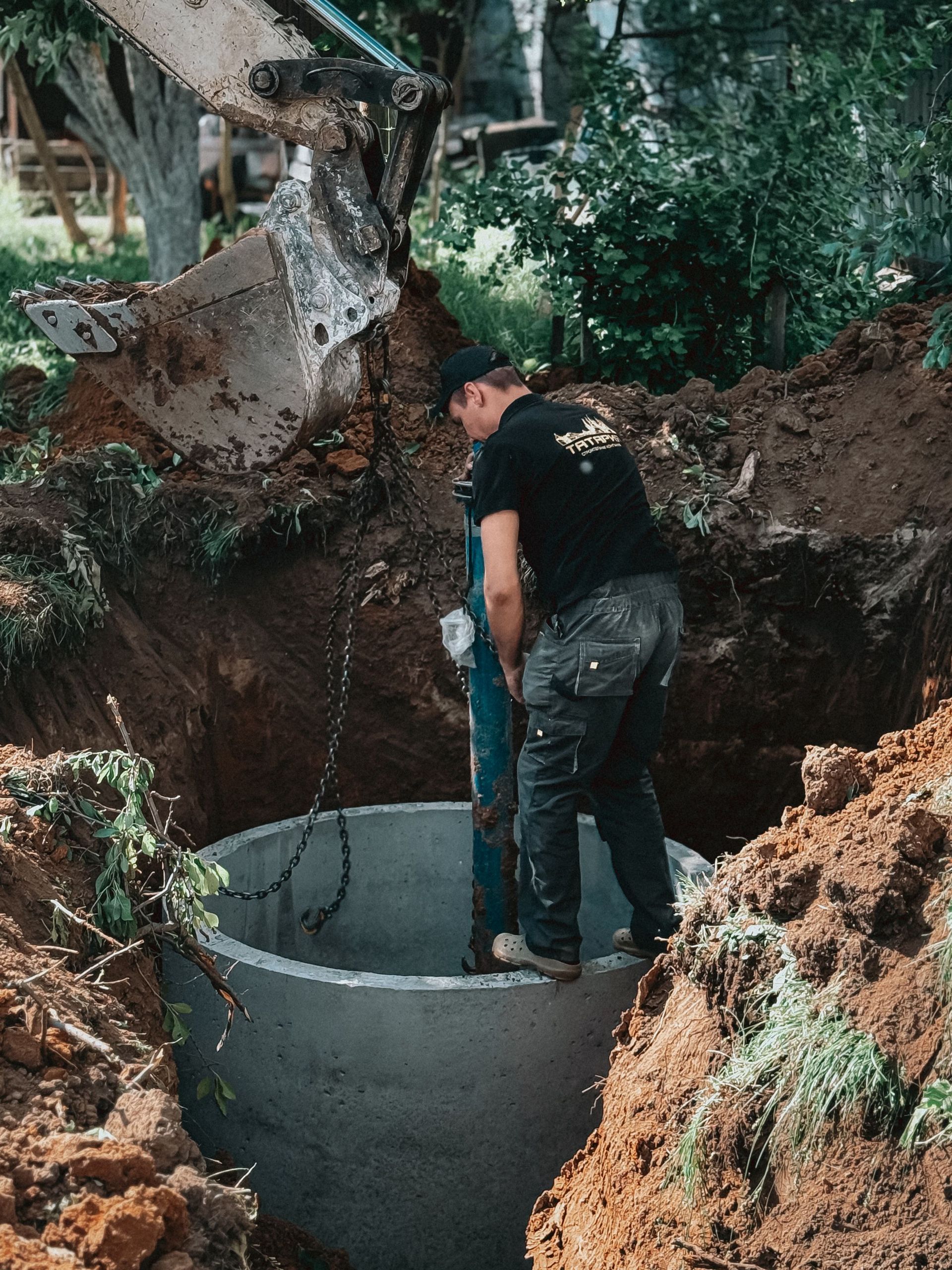
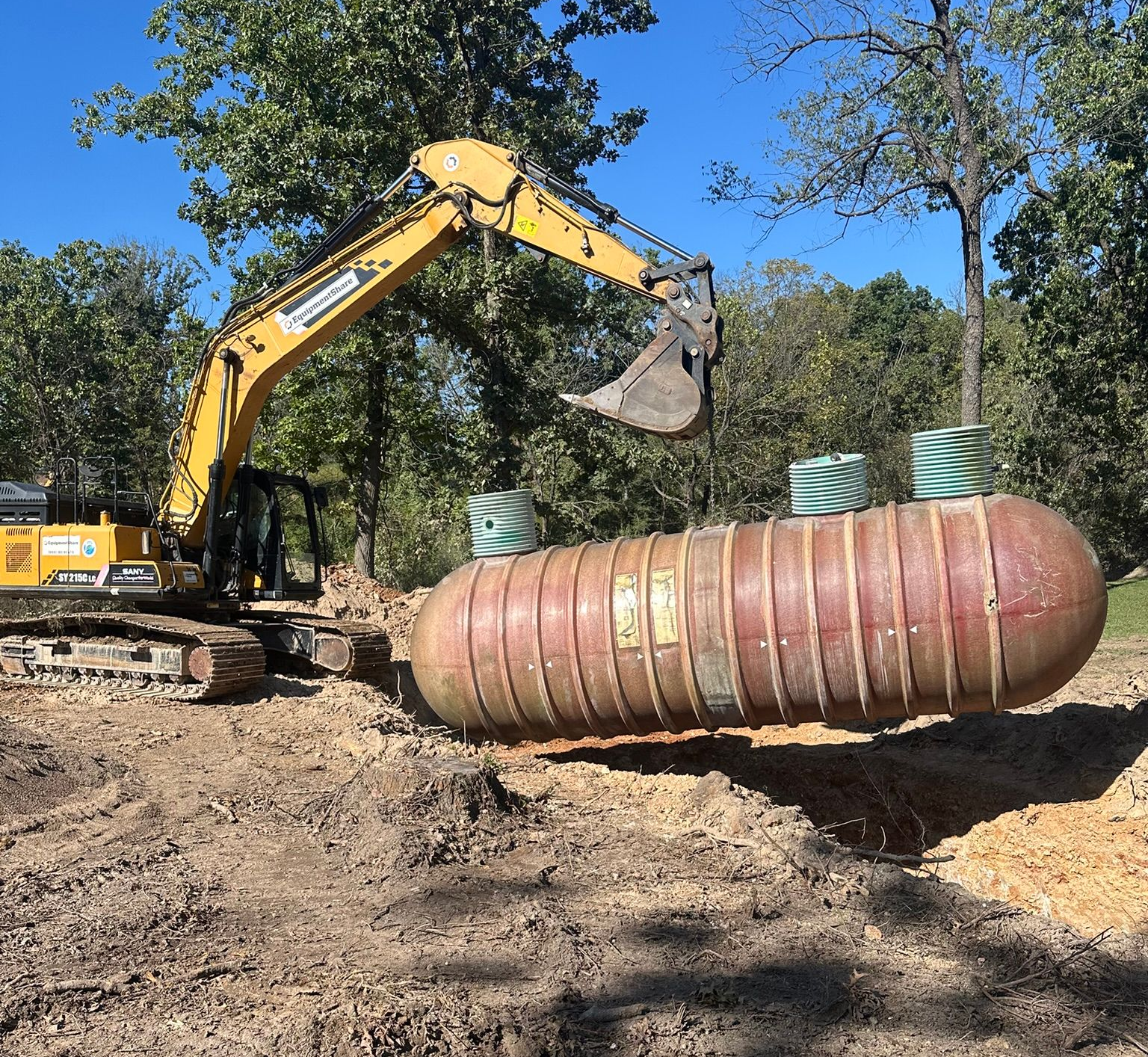
A conventional system has two main components: a septic tank and a drain field. Wastewater from the home flows to the tank, where solids settle and anaerobic bacteria begin breaking them down. Clarified liquid — called effluent — then flows through perforated pipes to the drain field, where it disperses through gravel and soil for final treatment.
Best for: Properties with well-draining soils (sandy loam, silt loam), adequate lot size for drain field placement, and relatively level terrain. Common on suburban and rural lots where soil testing confirms appropriate permeability.
Installation cost: Moderate. Lower than drip systems, typically higher than lagoons depending on site conditions and excavation requirements.
Maintenance: Low to moderate. The tank requires pumping every three to five years. The drain field requires no routine maintenance but can fail if the tank is neglected or if the system is overloaded.
Lifespan: 20 to 30+ years with proper maintenance. Drain field failure is the most common end-of-life issue and can be expensive to remediate.
Limitations: Doesn't work well in heavy clay soils with low permeability, high water table conditions, or lots with insufficient space for the required drain field footprint. In mid-Missouri, clay soils eliminate conventional systems as an option on many rural properties.
Drip Systems
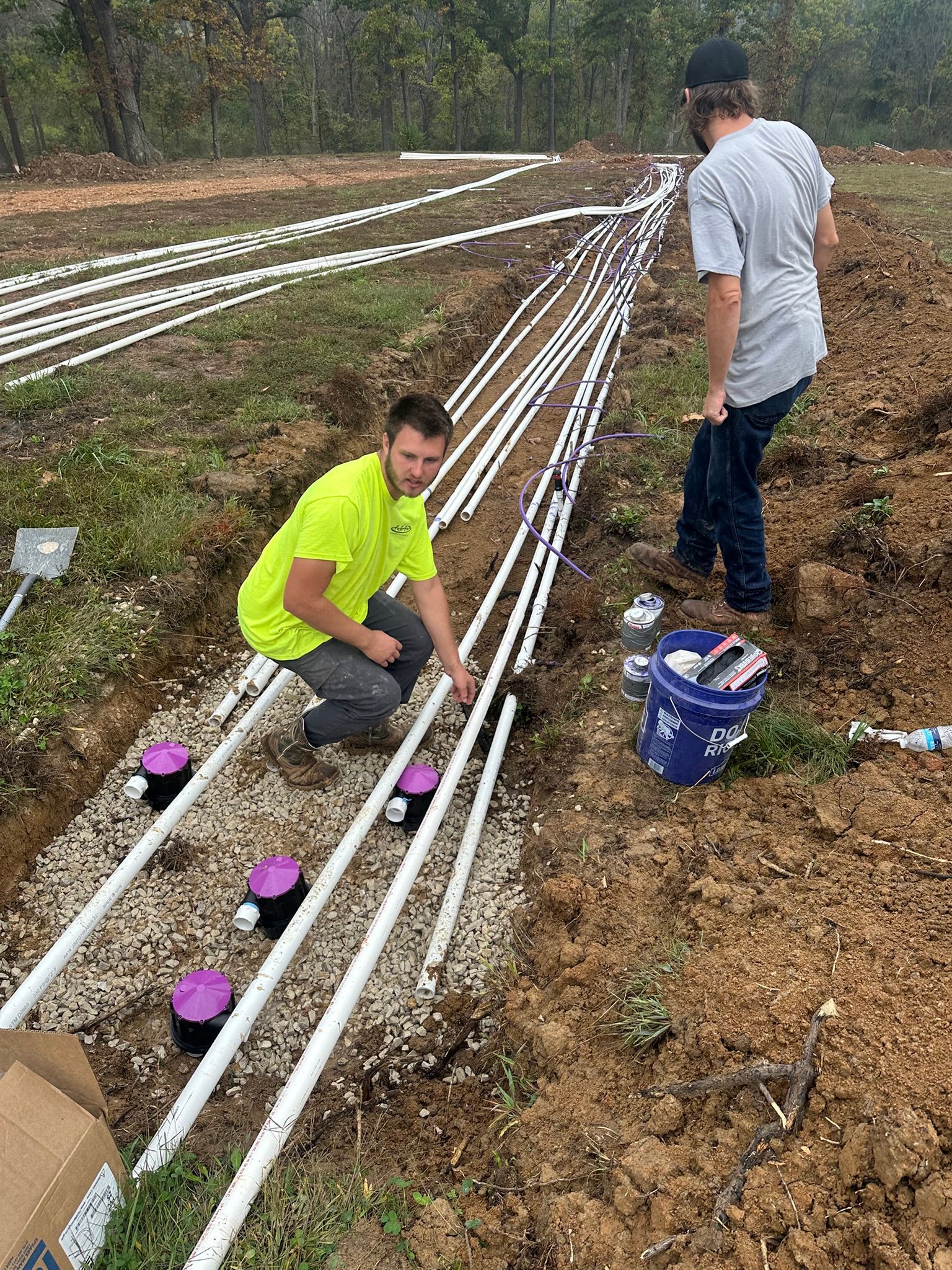
A drip system is an engineered alternative that delivers treated effluent through a network of small-diameter tubing buried just below the soil surface. The tubing releases wastewater slowly and evenly, allowing the soil to absorb it at a controlled rate. Most drip systems include a treatment component — often an advanced treatment unit — before distribution to improve effluent quality.
Best for: Properties where soil conditions or lot constraints make a conventional drain field impractical. Drip systems can work in heavier soils than conventional systems because the slow, metered delivery gives the soil time to absorb each dose. Also used on sloped lots and properties with irregular shapes.
Installation cost: High. The treatment components, pumps, distribution network, and controls add significant cost compared to conventional systems. Expect to pay considerably more than a conventional or lagoon installation.
Maintenance: High. Drip systems include pumps, filters, timers, pressure regulators, and distribution tubing — all of which require periodic inspection and eventual replacement. Missouri typically requires a service contract for systems with advanced treatment components. Annual maintenance costs are ongoing and meaningful.
Lifespan: The treatment components typically last 10 to 20 years before requiring major service or replacement. The distribution tubing can last longer if properly maintained and protected from root intrusion.
Limitations:
Complexity and cost. Drip systems solve problems that other systems can't, but they do so at a price — both upfront and over time. They're generally chosen when other options aren't viable, not as a first preference.
Lagoon Systems
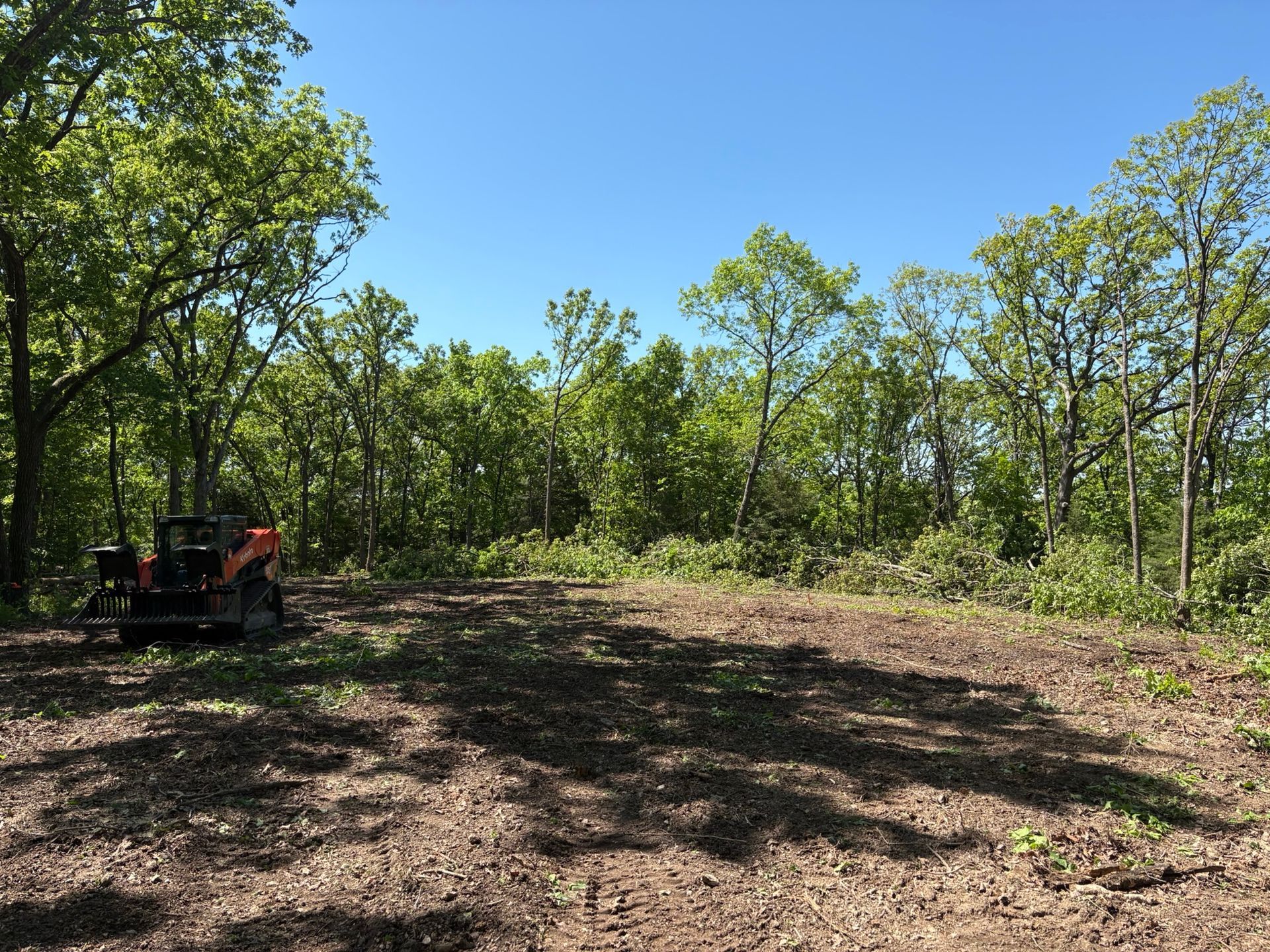
A lagoon is a shallow earthen pond that receives wastewater and treats it through natural biological processes — sunlight, wind, and aerobic bacteria. Missouri requires a minimum of three acres for residential lagoon installation, along with appropriate soil conditions and setback distances.
Best for: Rural properties with sufficient acreage, appropriate soil conditions, and homeowners who want a low-maintenance, low-cost system with a long service life. Very common in rural Missouri for exactly these reasons.
Installation cost: Low to moderate. Excavation and earthwork are the primary costs. No mechanical components means lower upfront cost than drip systems and often lower than conventional systems depending on drain field excavation requirements.
Maintenance: Low. Lagoons require periodic inspection of inlet and outlet structures and occasional dredging — typically every 10 to 20 years — when accumulated sludge reduces effective volume. No pumps, no filters, no controls to service.
Lifespan: Decades. A properly sited and maintained lagoon can operate effectively for 30 to 50 years or more.
Limitations: The three-acre minimum is a hard constraint. Lagoons also require appropriate setbacks from wells, property lines, and structures. Odor can be a consideration, particularly in warm weather. Not suitable for all soil conditions or for properties with high water tables.
Which System Is Right for Your Property?
The honest answer is that your soil and your lot determine your options as much as your preferences do. A soil evaluation by a licensed installer is the necessary first step — it tells you what the soil can support and what your county will permit.
Advanced Septic & Pumping installs all three system types throughout mid-Missouri, including Jefferson City, Columbia, Fulton, Eldon, and communities within a 65-mile radius. We can evaluate your property and walk you through which options make sense for your specific site conditions.
Call us at
573-636-2727 or visit
advancedsepticandpumping.com/contact to schedule a consultation.