Why Septic Maintenance Depends on the Type of System You Have
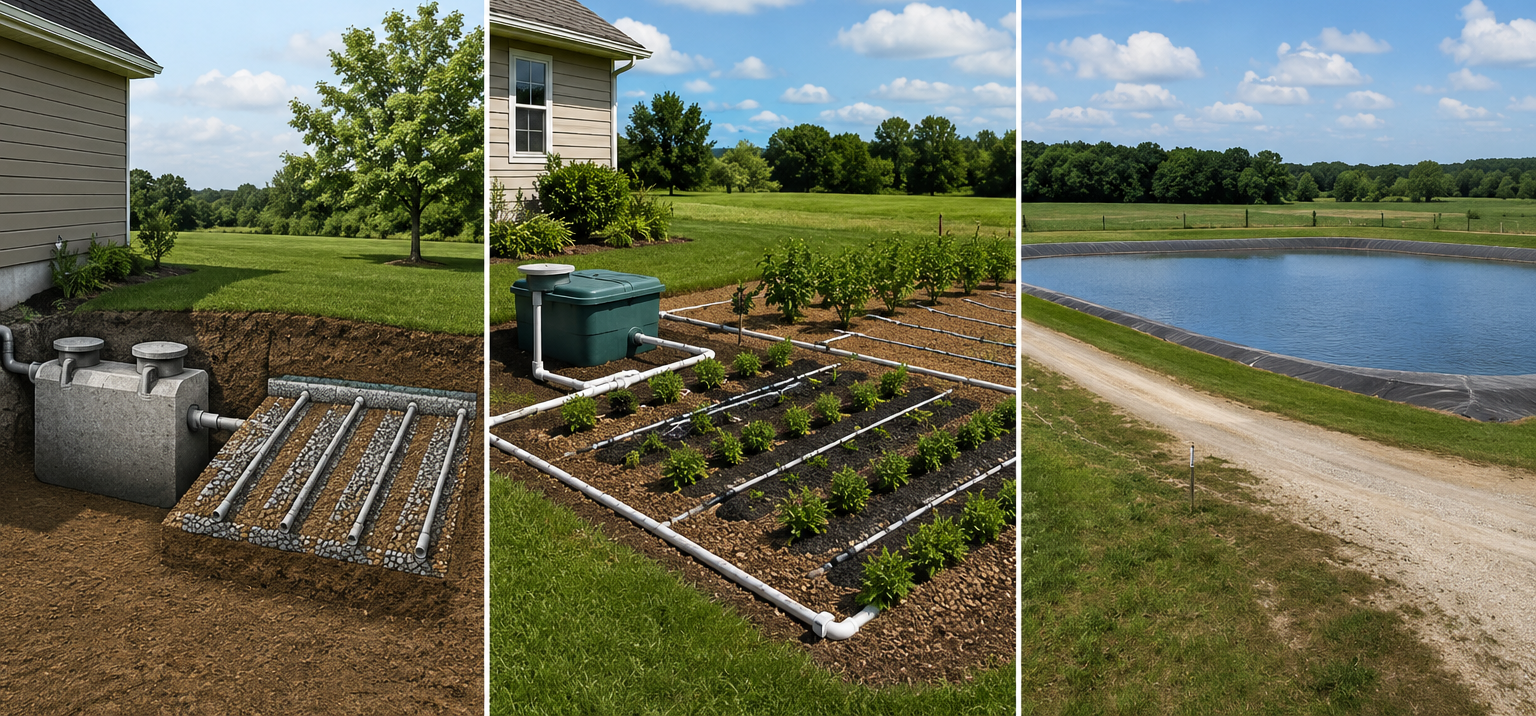
If you've ever gotten generic advice about septic maintenance — "pump it every three years" or "have it inspected annually" — that advice may or may not apply to you depending on what kind of system you have. Septic maintenance isn't one-size-fits-all. What's appropriate for a conventional tank and drain field is very different from what's required for a lagoon, a drip system, or an aerobic treatment unit.
Understanding what your system actually needs — based on how it works and what can go wrong — is the foundation of keeping it functional and avoidingexpensive repairs.
Conventional Systems: Tank-Focused Maintenance
In a conventional system, the septic tank is the component that requires the most routine attention. As wastewater enters the tank, solids settle to the bottom and form a sludge layer, while lighter materials float to the top as scum. The clarified liquid in the middle flows out to the drain field.
Over time, the sludge and scum layers grow. If they're not removed through pumping, they eventually reach the outlet pipe and begin carrying solids into the drain field — where they clog the soil and cause the drain field to fail. Drain field failure is one of the most expensive septic repairs a homeowner can face.
Key maintenance tasks for conventional systems:
Pump the septic tank every three to five years, depending on household size and water usage. Smaller households with larger tanks may go longer; large households with high water usage may need more frequent pumping.
Inspect the inlet and outlet baffles during each pumping — they keep solids from flowing in and out of the tank and deteriorate over time.
Protect the drain field by avoiding driving over it, planting deep-rooted trees nearby, or routing roof drains or surface water toward it.
Lagoon Systems: Inspection and Dredging
Lagoons are the lowest-maintenance septic option in common use in Missouri. Because they have no mechanical components, there's nothing to service on a regular basis in the way a pump or motor requires attention.
That said, lagoons
aren't maintenance-free.
Key maintenance tasks for lagoon systems:
Inspect the inlet and outlet structures periodically — at least annually — to ensure they're intact and not obstructed. The inlet pipe brings wastewater in; the outlet controls the water level and keeps the lagoon from overflowing. Both can deteriorate or become blocked.
Monitor the lagoon's appearance. Healthy lagoons typically have a greenish color from algae, which is part of the treatment process. Unusual coloration, excessive odor, floating solids near the outlet, or water levels that seem unusually high or low can indicate problems. - Dredge accumulated sludge when needed. Over years of operation, sludge builds up on the lagoon bottom and reduces its effective volume. Dredging frequency depends on household size and lagoon volume — many lagoons go 15 to 20 years or more before dredging is necessary.
Keep the berm and surrounding area maintained. The earthen berm that contains the lagoon needs to stay intact. Erosion, burrowing animals, and root intrusion from trees and shrubs can compromise it over time.
Drip Systems: Regular Scheduled Service
Drip systems are the highest-maintenance option of the three, and that's a known tradeoff when they're installed. The mechanical components that make drip systems work — pumps, filters, timers, pressure regulators, and distribution tubing — all require periodic attention.
Missouri regulations typically require a service contract for properties with drip systems and advanced treatment components. This isn't optional — it's a condition of the permit.
Key maintenance tasks for drip systems:
Service the advanced treatment unit as required — typically every six to twelve months. This includes cleaning, inspecting, and replacing components as they wear. - Clean or replace filters on a schedule. Filters prevent debris from entering the distribution tubing and clogging the emitters. Neglected filters can cause system-wide failures.
Inspect distribution tubing and emitters for clogs, damage, or root intrusion. Individual emitters can become blocked over time, causing uneven distribution and saturated areas.
Check pump operation and float switches. Pump failures in drip systems can cause the system to back up quickly.
Aerobic Treatment Units: The Most Demanding Schedule
ATUs are a specific type of advanced treatment system that introduces oxygen into the treatment process. They produce higher-quality effluent than conventional systems but require the most ongoing maintenance of any system type.
Key maintenance tasks for ATUs:
Inspect and service the air pump, aerator, or diffuser on a regular schedule — typically every four to six months.
Check chlorine or disinfection systems if present. Some ATUs include a disinfection stage before effluent is dispersed.
Maintain required service contracts per Missouri regulations.
Know Your System, Know Your Schedule
The first step in maintaining your septic system correctly is knowing exactly what type of system you have and when it was last serviced. If you're not sure — if you've recently purchased a property or inherited a system you don't have records for — a professional inspection is the right starting point.
Advanced Septic & Pumping services all system types throughout mid-Missouri. We can inspect your system, establish a maintenance baseline, and set you up with the right schedule going forward. Call us at
573-636-2727
or visit
advancedsepticandpumping.com/contact.
Recent Posts